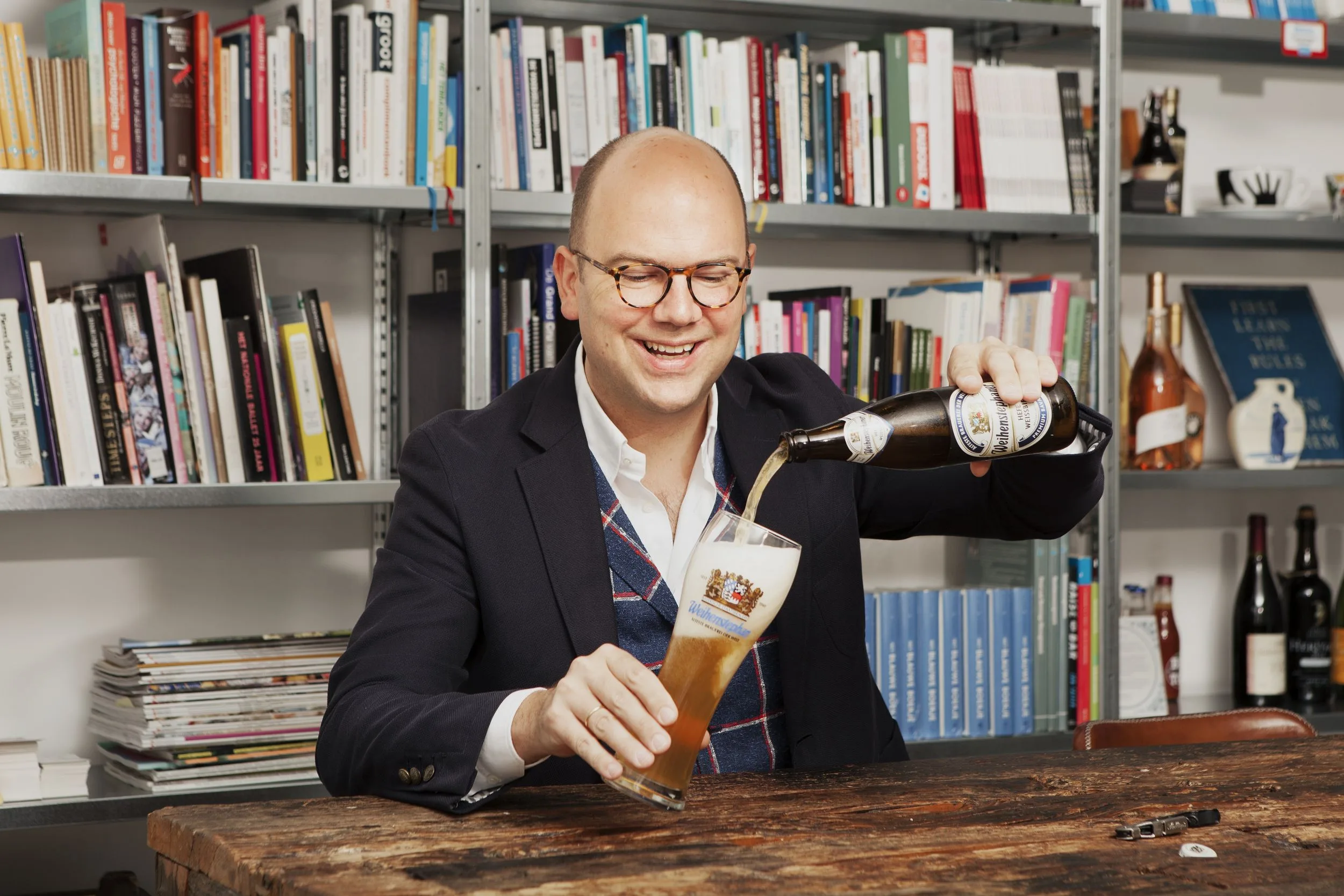
August 30, 2017 · Team HG

Some time ago, I had the opportunity to give a lecture to students at Hotelschool Den Haag, Amsterdam campus, about craft beer in gastronomy. It was a fantastic opportunity to get the upcoming generation of top professionals in the hotel and hospitality world excited about the concept of beer and food pairing.
On the eve of this lecture, I was allowed to spend the night at the school hotel. This ‘Skotel’ is a five-star hotel with 20 rooms located on the edge of Rembrandt Park. An ideal base for a stay in Amsterdam.
Coincidentally, the ‘Festivale Brettanomyces’ was also taking place that day, featuring gatherings, lectures, and tastings at various locations in Amsterdam regarding everything related to sour beers and wild yeast. An excellent opportunity to delve into the subject once again on the eve of my beer college course.
Sour beers are the latest hype in the craft beer world. That does not mean it is a new concept. Wild fermentation in beers is, in fact, literally older than the road to Rome; wild fermentation was de facto a part of beer until Louis Pasteur in the second half of the 19th century managed to fathom the fermentation process. Until that time, brewing was an open process in which the wort was impregnated by wild yeasts swirling in the air. Pasteur's discovery led to a new brewing process, in which selected yeast strains in a closed process produced a beer that was consistently consistent in taste. In this ‘scientific brewing’, the Brettanomyces-yeast seen as an infection, a pariah that ruined the taste of the beer.
For well over a century, the closed process was embraced, with the exception of a few stubborn Belgian brewers from the Zenne Valley. These brewers produced lambics and blended gueuze and kriek from them. There was also a brewery in Roeselare that added lactic acid yeast and thus also sold sour beer: Rodenbach.
These are beers where, for the majority of my craft beer career, I had to ask people: ‘Are you sure?’, because otherwise you would get it back with the complaint ‘this beer isn’t good anymore, it’s sour’.
So now sour beer is back, but in a form where the scientific brewing method is applied to yeasts previously considered anti-modern. There is an enormous range of flavors in sour beers, from very subtly fresh and tangy, like an unsweetened radler, to overwhelming funky, hippy, and horse blanket flavors that challenge even the most seasoned beer connoisseur.
I was able to conclude my lecture the following day with the best homework assignment the talented students of the Hotel Management School had ever had.
I would also like to pass this assignment on to you, dear reader: ‘Go into town, onto a terrace, and drink beer.’ A nice Brett beer is certainly my recommendation.
Click here and read Ivo's other columns as well.
Ivo Thijssen
Beer sommelier

Ivo is an international beer sommelier, entertainer, and hospitality expert. He has an immense passion for beer, the hospitality industry, and hospitality. Ivo will write a monthly column for Horeca Groningen.