November 11, 2025 · Team HG
Bread as bread is meant to be. Without added ‘junk’. Pure and sourced from the region. Three Northern artisans consciously choose to work together to make the circle from grain to guest visible again. In the kitchen of restaurant Dokjard in Groningen, that chain comes to life. Farmer, miller, baker, and chef tell the story of the region together.

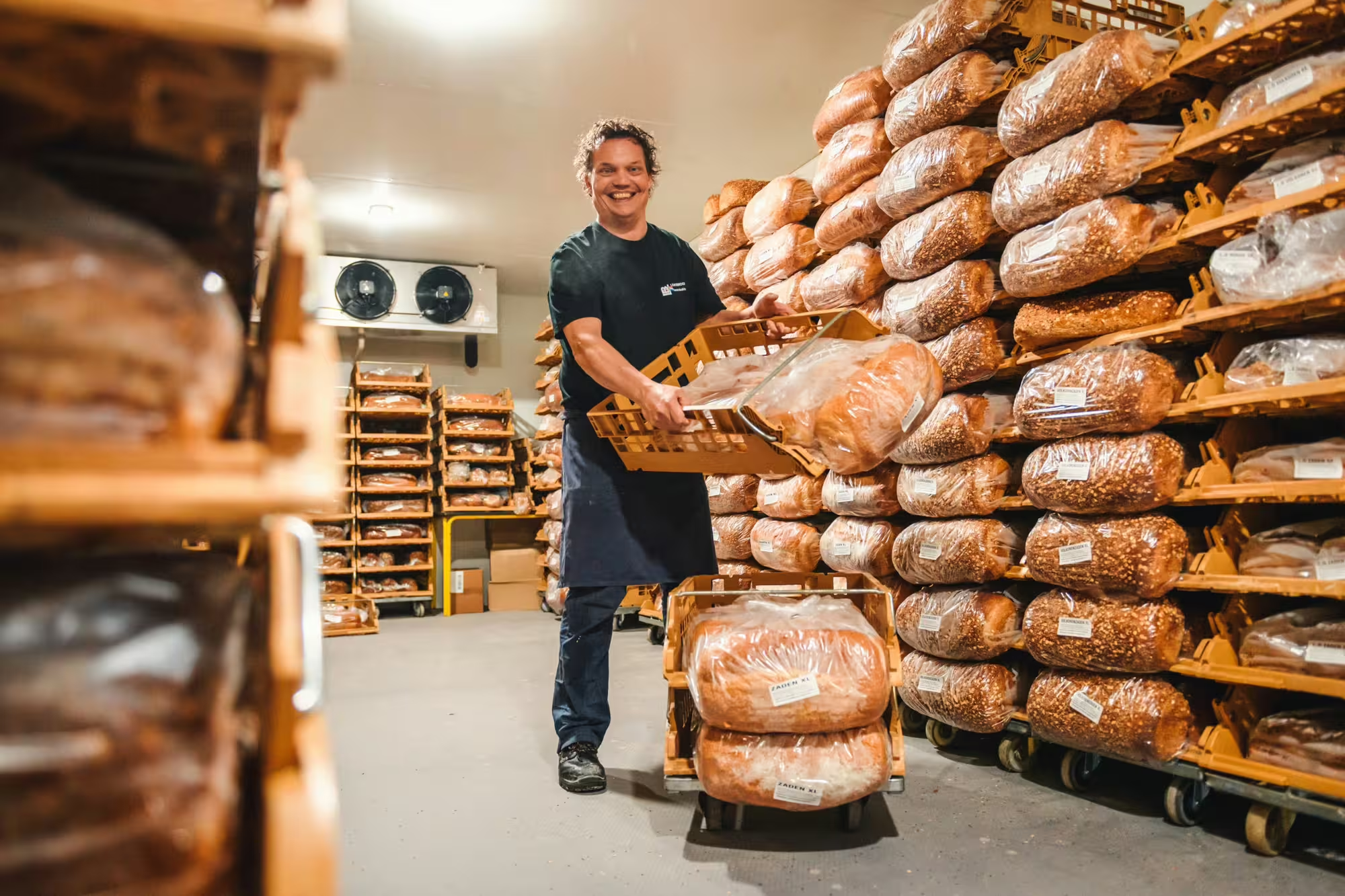
‘I used to bake a thousand loaves a day,’ says Patrick Harms in his bakery in Vries, where the aroma of fresh spelt bread mingles with the warmth of the stone oven. ‘We had four shops and forty employees. Everything was going well, but I had mainly become a manager and was no longer a baker.’ Ten years ago, he changed course. He closed his shops and started over, on a small scale. ‘I wanted to return to the craft. Not mass production, but attention. Bread that has a story.’
Nowadays, that story begins with the farmer in Gasteren, where wheat, rye, and spelt grow on the Hondsrug. From there, the grain goes to Mulder Pot Mill in Kropswolde, where it is ground into flour. Patrick then bakes his bread from it, in small quantities, and without bread improvers. Everything is done by hand; shaping by hand, forming by hand, and then putting everything into the oven by hand.

‘It is a conscious choice,’ he says. ‘Everything made here is regional. The miller tests every grain in his laboratory. I know exactly what I bake with and what I use. And the best part: I never throw anything away. People order through my webshop, so I bake what is needed. That is sustainability to me.’
In miller Jan Pot's family, the craft has been passed down for three generations. "My father and grandfather also milled," he says proudly. "We are now the only mill in the three northern provinces that still mills professionally."
Mulder Pot processes thousands of kilos of grain annually and supplies over two hundred regional shops, eighteen Jumbo supermarkets, and artisanal bakers such as Harms’s. His mill grinds in ten passes, ensuring the flour remains of high quality. ‘We don’t force anything,’ says Jan. ‘As a result, the proteins remain vital and the bread gains volume. You can taste the difference.’


Contact with farmers is intensive: a list of certified wheat varieties is published every year. Jan carefully selects which varieties are suitable for bread wheat, he looks at nitrogen efficiency and disease resistance, and discusses with the farmer what is to be sown. ‘Such a variety lasts six years, after which you have to renew,’ he explains. ‘That keeps you sharp and guarantees quality.’
The collaboration with Harms has existed for about twenty years. ‘Patrick was already coming here when he was still baking on a large scale. We have always stayed in touch. Now we do everything locally. Besides being the most sustainable option, it is also simply logical. That is how it should be.’
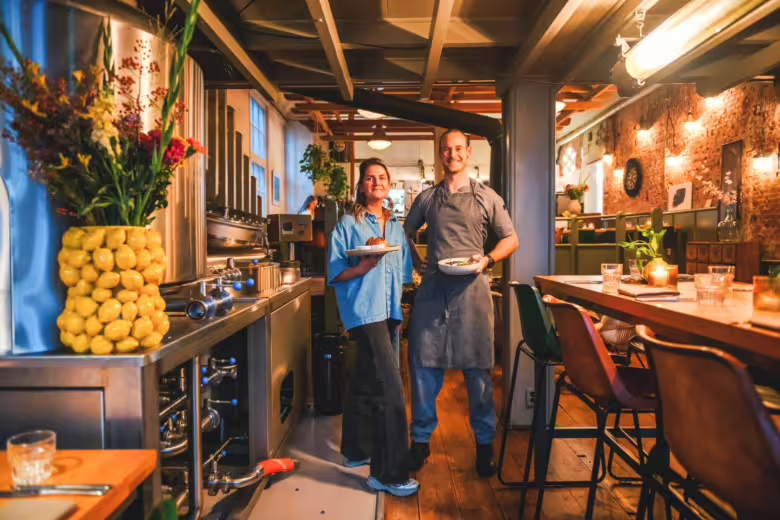
In the tiny open kitchen of DokjardAt the restaurant on the Noorderhaven in the city, the bread was baked in-house for a while. ‘That was fantastic, of course,’ says owner Jard van Dalen, ‘but the guys in the kitchen always had to start so damn early, because otherwise they couldn’t fit enough bread in our little oven. Also, the KitchenAid had to run four times for a halfway decent amount of dough. After a few months, we decided to outsource it.’

‘It is wonderful, of course,’ says Jard. ‘We brew our own beer here, and Patrick makes our beer rolls from the spent grain (the by-product of brewing, ed.). That way, nothing goes to waste.’ That collaboration started by chance. ‘We were looking for someone who could make bread from our spent grain,’ Jard explains. ‘We found Patrick through word of mouth. He stopped by, tasted the beer, saw the kettles, and said: I want to work with this.’ After two tasting rounds, the recipe was settled: a robust roll with the aroma of malt, a hint of caramel, and the recognizable signature of Harms Heerlijck.

‘It is typically the kind of product that only comes into being when people find each other,’ says Patrick. ‘They with their flavors, I with my dough, and Jan with his grain. Everything comes together here.’


In the collaboration between miller, baker, and restaurant, the distance is small, both literally and figuratively. If anything changes about the flour, Patrick calls Jan immediately. ‘Then he says: this is a new harvest, it absorbs a little more water, take that into account when baking. That way, we know exactly what we are doing.’
That direct line makes the system flexible and fair. ‘Everyone knows what is happening,’ says Jan. ‘The farmer gets a fair price, the baker knows what he is baking, and the guest tastes the difference.’

Bee Dokjard That story literally makes its way to the table. ‘Our guests love hearing that their bread comes from a few villages away,’ says Jard. ‘It fits our vision: local, artisanal, transparent. And it makes our menu coherent, not only in taste but also in meaning.’


Patrick believes that this transparency is the key to future-proofing. ‘Everyone is welcome to walk in here. They see me baking, they see the dough. There is nothing to hide. I think that is important.’ His bread is sturdy, compact, with a short shelf life. ‘Bread that stays fresh for a week—that is certainly questionable,’ he says with a laugh.

His ingredient list is short: local grain, fava bean flour, and rapeseed oil from Zuidwolde. No powders or artificial additives. ‘I use fava bean flour because it is rich in protein, which improves the dough naturally. And I buy my oil from a farmer I know.’ Jan adds: ‘Small producers keep the chain alive. Everything is getting bigger and more anonymous, but these kinds of collaborations prove that there is room for quality. Just like small breweries: It is a niche, but a valuable one.’
For them, sustainability is not just a matter of the environment, but also of the continuity of craftsmanship. ‘We need farmers,’ says Patrick. ‘Not just for grain or meat, but because they form the basis of everything we eat.’ He tells the story of a farmer in Zeegse from whom he sources minced meat. ‘When a cow dies there, that man is sad. That is real. That touches me. To him, it is not a product, but an animal he raised. And we must hold on to that awareness.’ According to Patrick, it is precisely these kinds of stories that bring people closer to their food. ‘When consumers see how much love and labor goes into their food, they appreciate it differently. Then you taste with respect.’

When asked how he sees the future of local food, Patrick doesn't have to think long. ‘Positively. Young people are becoming increasingly aware of what they eat and don't want junk anymore. You notice that they are making more conscious choices.’ Jard sees this reflected in her restaurant as well. ‘Our guests are asking more and more questions. They want to know where something comes from, who made it. I think that's wonderful; that conversation is part of eating.’ Jan adds: ‘We are at the beginning of something that should be normal. Bread, beer, meat—it should come from your own local area. When we take that for granted again, then we are truly acting sustainably.’

‘You just need to go talk to some people,’ says Patrick. ‘Go to a farmer, a baker, a restaurant. Taste some. Then you’ll remember how it’s supposed to taste.’

Read all about the Green Choice? The Green Choice is a project in which Groningen hospitality entrepreneurs, chefs, and local producers collaborate to make sustainable food routes visible. Through portraits, interviews, videos, and cooking demonstrations, the journey of local products—such as grains, potatoes, game, and shrimp—from producer to dish is visualized. The project promotes the short supply chain, strengthens regional cooperation, and offers inspiration for both hospitality professionals and conscious consumers. De Groene Keuze is an initiative of the Foundation for Economic Cooperation Northern Netherlands supported by the Province of Groningen and Municipality of Groningen
© 2025 ESNN Foundation
Text: Tanja Tuinstra
Photography: Jasper Bolderdijk
Video: Twan Siertsema