June 6, 2017 · Team HG

The number of nightclubs in the Netherlands continues to decline at an undiminished rate. Over the past five years, the number of nightclubs in the Netherlands has decreased from 226 to 174, a drop of 23%. Over the past ten years, the number of nightclubs fell by 44%. In the beverage sector, under which nightclubs fall, the supply also declined, though much less sharply (6% in 10 years). Despite the negative developments, we also see, particularly in the major cities, that new clubs are opening their doors and capitalizing on the trend of ‘blurring’. Clubs where one can also dine and even have breakfast, or which also serve as workspaces. This and more is revealed in research by Van Spronsen & Partners hospitality consultancy.
According to HorecaDNA, South Holland still had the most discotheques in 2008 (56). However, due to a sharp decline of over 55%, North Holland (where the supply decreased by ‘only’ 31%) now has the most discotheques (33). In Groningen (-67%) In Limburg (-62%), the supply declined relatively the hardest. Friesland appears to be the province where the discotheque is still holding its own to some extent. The supply decreased by less than 30%, and the province has, relatively speaking, by far the most discotheques (1.9 per 10,000 young people). This can be explained by the fact that this province is very popular among young people as a holiday destination, just like Zeeland (1.3 discotheques per 10,000 young people).

Despite a decline in supply, Amsterdam (11 discotheques) stands head and shoulders above the other cities, followed by Rotterdam, where the supply nearly halved. On a negative note, The Hague stands out in particular, where a net total of 6 discotheques disappeared over a 10-year period (-67%).
Reasons for the declines can still be found in the large number of dance festivals. According to ING, approximately 170 dance events are organized annually. In 2012, there were only 130. Amsterdam Dance Event attracted 375,000 visitors last year (compared to 200,000 in 2012) who came to see 2,200 artists. According to ING, the average spending at a dance festival is around €150, which is 10 times higher than the average spending in a nightclub. With such expenses, it is logical that young people visit nightclubs less often; after all, a euro can only be spent once.
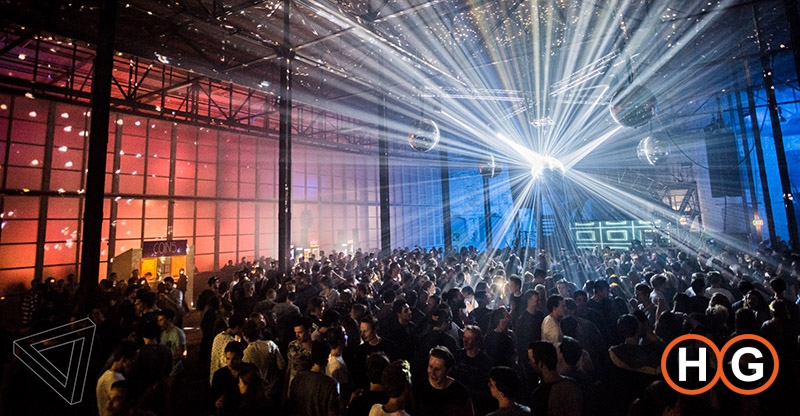
Competition can also be found from music venues and concepts such as the Westergasfabriek, which offers a broad and varied program for a wide audience. In major cities, going out to hotel bars is also becoming increasingly popular, and businesses with rooftop terraces can count on a lot of customers in the summer if they book a DJ. Cocktail bars are also becoming popular as nightlife venues, although this is primarily for an older crowd. Finally, at many beach pavilions, nightlife has become an integral part of the concept. It is all about the experience, and this makes it difficult for nightclubs to attract an audience, particularly in the summer…
Our own survey shows that there are more businesses in the Netherlands that can be classified as nightclub-style establishments (concepts featuring DJs where the public comes to dance at night). Approximately 40 nightclub-style businesses are already operational in Amsterdam, and 20 in Rotterdam. While many nightclubs struggle to fill the venue on Friday and Saturday nights alone, we are seeing an increasing number of club concepts in cities that are seeking to broaden their offerings with weekday activities, from early morning until deep into the night.
Food is becoming an increasingly important part. For example, BAR in Rotterdam offers a concept with salads, organic burgers, fish & chips, and hot dogs, and at The Butcher Social Club in Amsterdam, you can even enjoy an extensive breakfast.
Another great example of blurring is Cruquius Gilde. Here, craftsmanship, architecture, culture, and social entrepreneurship come together. Club nights are also sometimes organized here.
Looking at our neighboring countries, it is striking that nightclubs play a more significant role within the hospitality industry there. In Germany, 1% of hospitality businesses are nightclubs (compared to 0.4% in the Netherlands), and the density (number of nightclubs per 10,000 young people) is 2.5 times higher than in the Netherlands. Here too, the supply declined during the period 2011–2015, albeit much less rapidly (22% versus 46% in the Netherlands). In Belgium, 0.8% of hospitality businesses are nightclubs, and the density is almost four times higher! Belgium has 2.5 times as many nightclubs, despite the country having ‘only’ 11 million people. The number of nightclubs also decreased in Belgium, but only by 19%. An explanation for the large difference cannot be traced back to a single cause. Germans drink significantly more beer (from the age of 14, you are allowed to drink beer and wine in the presence of parents), whereas in Belgium, young people are allowed to drink beer from the age of 16. Young people therefore come into contact with alcohol earlier than in the Netherlands. This may play a role. In addition, the Netherlands is the dance festival country of Europe, if not the world, and there are a large number of beach pavilions that partly serve an entertainment function. As a result, there is less demand for discotheques.
We expect that the bottom of the decline of the traditional discotheque is not yet in sight. More and more concepts somewhat outside the industry are emerging that also offer club/dance activities. However, because they are not entirely dependent on this, this business model is often stronger than that of the regular discotheque, which only manages to attract an audience on Saturdays. Thinking less in boxes seems to be the motto….