July 8, 2025 · Team HG
In the far north of our province, on the Wadden coast, the fresh sea breeze blows across the Groningen fields. The soil here is different—saltier, richer—and more than just grain grows here. On this clay soil, Chef Stefan Kollumer of Herberg Restaurant Molenrij and arable farmer Hero Havenga de Poel of Landgoud find each other and share the same mission: to show that short supply chains, local products, and sustainability are not only necessary but also irresistibly delicious.

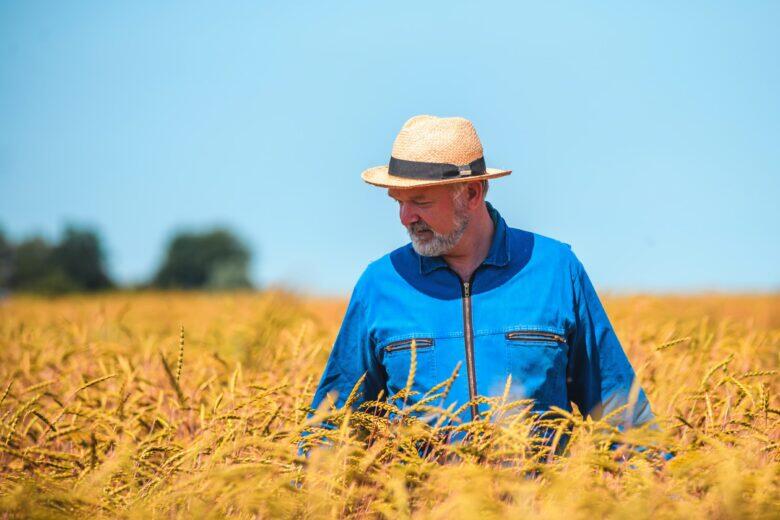
Hero runs an organic arable farm in Kloosterburen together with his family. The family has been active at this location for over 75 years; he is the third generation on the farm. But Hero’s path to farming life was not a foregone conclusion. ‘I am actually a career changer. Before 2019, I worked as a strategic advisor for aldermen and provincial councilors. It was only during a management training course that I realized: I was born a farmer, and I have the choice to become one. That felt like a great blessing.’
What makes Hero special is his distinctiveness and dedication. He grows organic grains for baking quality. ‘That means you can bake a real loaf of bread using only water, flour, salt, and sourdough. Incredibly pure. And in the whole of the Netherlands, there are only a handful of farmers who can do that,’ he emphasizes. ‘Our method of cultivation makes us unique. We grow it in such a way that we deliver good quality, and therefore can also charge a different price.’


The area in which Landgoud The farm is primarily focused on potato cultivation. Which, according to Havenga, is a very good thing, because those potatoes go all over the world and feed many people, particularly in Africa. But business operations at this type of farm work very differently. ‘I prefer short lines of communication, the personal contact I have with my customers.’ And he has that. His grains do not disappear anonymously in bulk transport. ‘Ten minutes before you arrived here, a baker from Friesland was standing at the door. He comes to pick up his flour every other week. That contact with your customer is so valuable.’
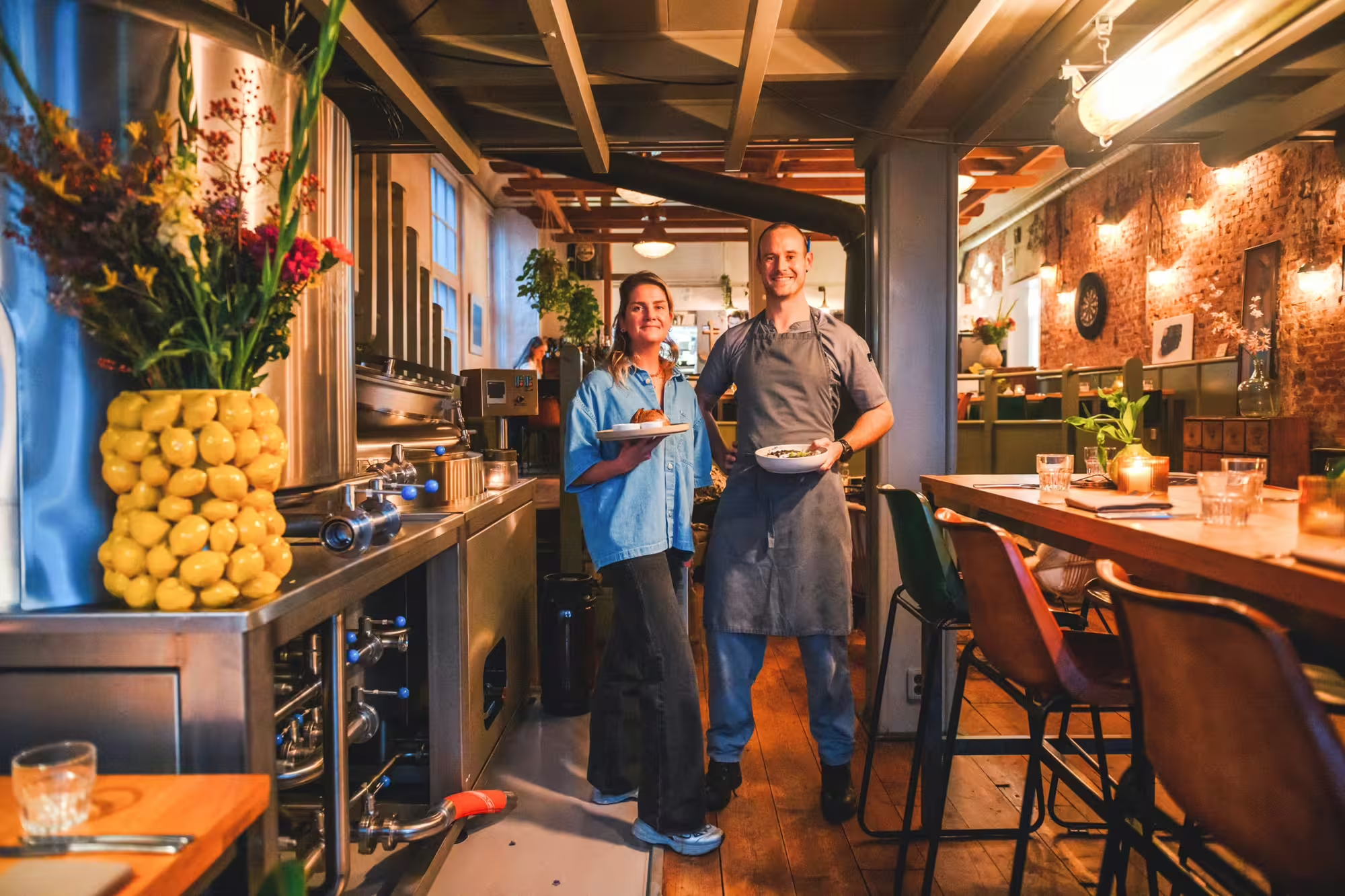
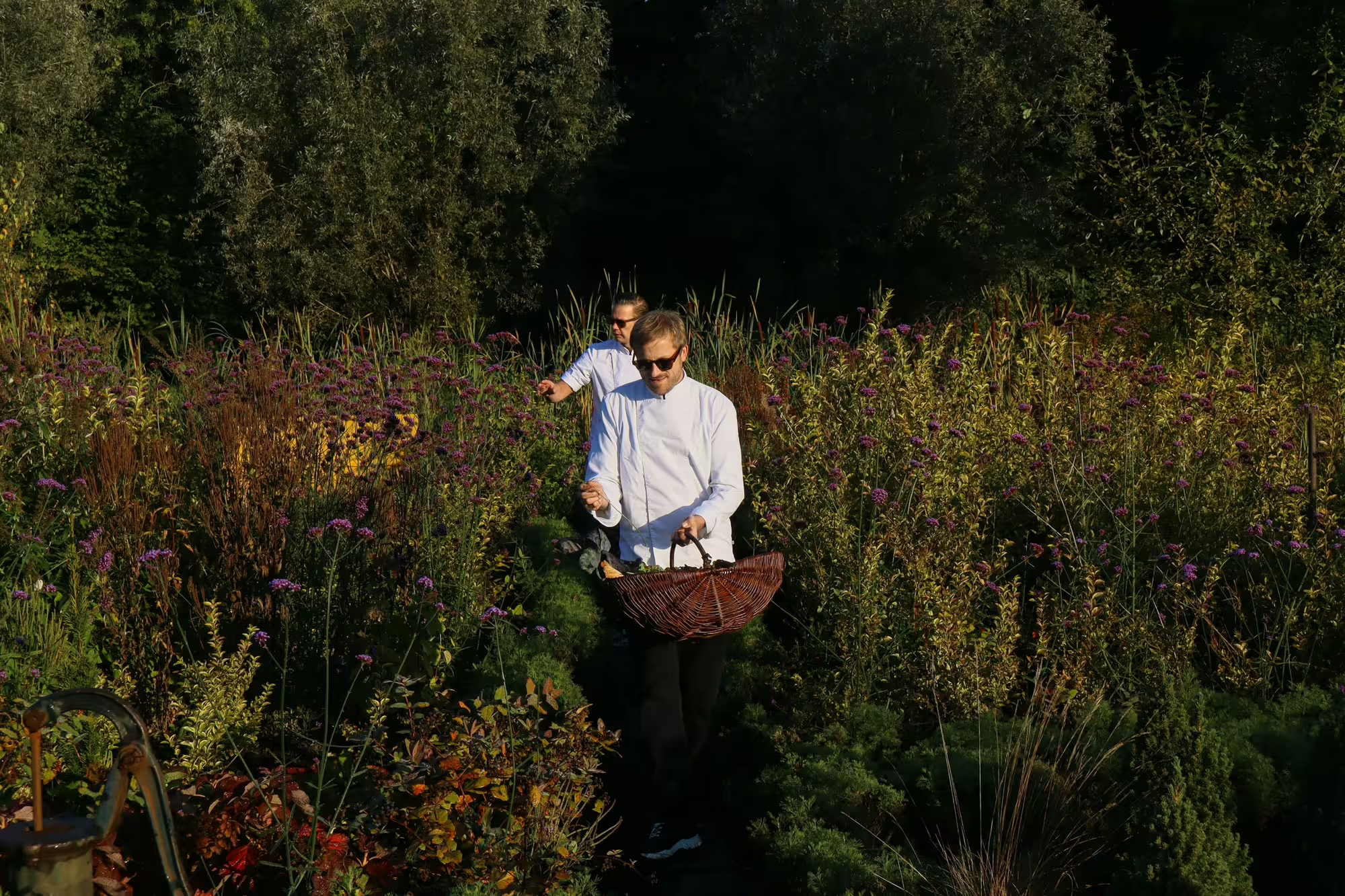
Stefan Kollumer runs it together with his wife Simone Herberg Restaurant Molenrij, an atmospheric restaurant in the Groningen countryside. ‘In 2019, we took over an old B&B property and turned it back into a restaurant. Not easy, because the location is quite remote. But that also forces you to be creative.’

His secret? ‘We cook with fresh, regional, organic products. As pure as possible, with as little fuss as possible. And I like to share that at the table as well.’ It works, because guests keep coming back specifically for his spelt risotto with black garlic, a dish in which the collaboration with Hero is literally on the plate. ‘That spelt comes from Landgoud. And the story behind it completes it.’
What makes the collaboration between this farmer and chef so powerful is that it stems from a genuine interest in each other's work. ‘We make beautiful things, they make beautiful things,’ says Hero, ‘and then it is nice when you can strengthen each other in that.’

Stefan adds: ‘What I really appreciate is that Hero is always proactive. I just have to call or send a text, and it’s ready an hour later. No impersonal order list at a wholesaler, but a real conversation. And of course, my restaurant is just around the corner, so I can just pop by in no time.’


The contact between the two goes beyond delivery. ‘Sometimes we take culinary students to Hero’s company,’ says Stefan. ‘There, they receive an explanation of how grain grows and how spelt is milled. There, they learn the real story behind the ingredients.’
For both gentlemen, sustainability is daily practice, a matter of course. ‘For me, sustainability lies primarily in the soil,’ explains Hero. ‘Healthy soil life ensures a healthy plant, with more flavor and resilience. We only use solid manure, no liquid. If I start hollowing out my soil here, I won’t get a yield. It’s that simple. And sometimes that sustainability really comes down to the postage stamp level. For example, if there is a bird’s nest in the middle of the field. In that case, I simply cannot plow there.’

Stefan wants to know exactly where his ingredients come from. ‘I am certainly willing to pay more for quality. If a cauliflower looks beautiful and comes from a local grower, then I have a product I stand behind and that my guests can taste. But that isn't always the case. For instance, I recently had a locally grown romanesco. It was a very small head and I had to pay something like five or six euros for it. That’s all well and good, but then you really miss the mark.’
Choosing sustainability is not always the easiest path. ‘People have become lazy,’ says Stefan matter-of-factly. ‘We want everything fast and ready-made. But because of that, we lose our distinctiveness.’ Hero recognizes this. ‘At the wholesaler, you call and it’s there tomorrow. With me, you have to think ahead. But my customers know that. They make that choice consciously, because they also want to be proud of what they serve.’
The importance of transparency works out very well for both parties in the collaboration. ‘We stand in Molenrij on the menu, but what I really enjoy is when guests at the table hear: ‘This risotto comes from Landgoud, this grain was grown in Kloosterburen,’ says Hero. ‘That gives a sense of pride. And as a restaurant, you are then not just a kitchen, but a platform for producers.’ Stefan continues: ‘People appreciate that. They love knowing where something comes from. And we are happy to share that. After all, it is a large part of the experience at the table, and that is also how you can distinguish yourself as an entrepreneur.’

Both Hero and Stefan hope that more hospitality entrepreneurs and farmers will follow this path. ‘It doesn’t all have to happen at once,’ says Hero. ‘Just start with one product. One farmer. One ingredient you really know. That’s where it begins.’ ‘If you know where your potato comes from, if you pick up your fish yourself at the fish auction instead of the wholesaler, then something changes,’ says Stefan. ‘You start cooking differently. I even think you start cooking better.’

Whether it is risotto made with local spelt, homemade mustard, or yogurt from Waddenmax, at Herberg Restaurant Molenrij you taste the region. And at Landgoud, you see the love for the earth in every grain.
Together, Stefan and Hero show that a sustainable future begins with collaboration, craftsmanship, and attention. Attention to soil, product, dish, and people.

Read all about the Green Choice? The Green Choice is a project in which Groningen hospitality entrepreneurs, chefs, and local producers collaborate to make sustainable food routes visible. Through portraits, interviews, videos, and cooking demonstrations, the journey of local products—such as grains, potatoes, game, and shrimp—from producer to dish is visualized. The project promotes the short supply chain, strengthens regional cooperation, and offers inspiration for both hospitality professionals and conscious consumers. De Groene Keuze is an initiative of the Foundation for Economic Cooperation Northern Netherlands supported by the Province of Groningen and Municipality of Groningen
© 2025 ESNN Foundation
Text: Tanja Tuinstra
Photography: Jasper Bolderdijk
Video: Twan Siertsema