July 10, 2019 · Team HG
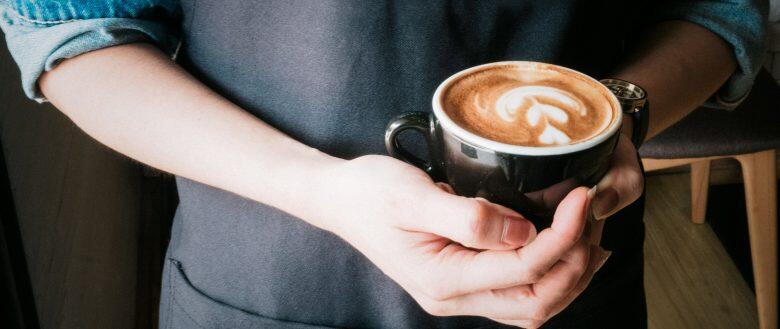
NThe Netherlands is a coffee country. We drink a huge amount of coffee, both at home and in the hospitality industry. Nowadays, you can find a coffee shop on every street corner, and baristas are creating increasingly exotic coffee preparations. Technological advancements and innovations are turning coffee machines into smart machines. Fully automatic coffee machines are now on the market. And what about a robot that prepares your coffee? In this article, you will read all about the latest trends and developments regarding coffee in the hospitality industry.
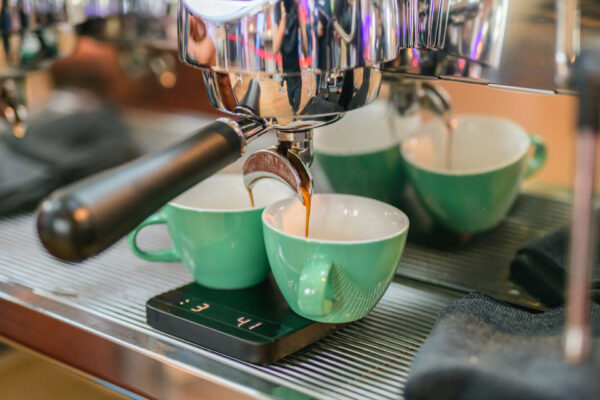
When you look at it, you wouldn't say it's a coffee machine. At first, you assume it's a beer system with taps. Yet, it really is coffee, not beer, that comes out of the machine the moment you place a cup under it. It is currently one of the most advanced coffee systems in the world, where the technology is entirely hidden under the hood and the guest only sees the chrome taps.
The Modbar was introduced by two Americans. They felt that the current large barista machines in restaurants and coffee shops were not appealing and felt it was time for something new. In the Netherlands, a coffee bar introduced Deli Roekoekoe First, the Modbar. It is a trend you will see increasingly in coffee bars and restaurants.
Several branches of Cafe X have already opened in San Francisco. This is a coffee shop where you can order coffee via an app. After placing an order, a team of robotic arms gets to work preparing your cappuccino or other type of coffee.
The robot coffee bar of Cafe X makes a cup of quality coffee within a minute with the precision of a robot. They currently have three locations, including a street version. Founder Henry Hu secured seed capital from a foundation. Subsequently, Hu raised another 14 million dollars. Building a Cafe X coffee bar costs about 50,000 dollars.
Because there are three points per robot where a customer can pick up their coffee, even slow customers are usually not a stumbling block. Especially since they can place and pay for their order digitally. The only thing you have to do to pick up your coffee is enter a 4-digit PIN code. Ideal, therefore, for places where many people want to drink their freshly brewed coffee at the same time. In any case, the chance that coffee in the Netherlands will be served by robots in a few years is quite high.
Cold brew is a method in which ground coffee beans are steeped in cold water or room-temperature water for up to 24 hours. This results in greater oxidation. A sweet flavor develops that is much less acidic and bitter than regular iced coffee. Iced coffee is brewed hot and then cooled down. Cold brew has never been hot and is therefore brewed cold.

There is an increasing demand for coffee with plant-based milk. In addition to soy and almond milk, we are using more and more other types of milk, such as macadamia, coconut, oat, and cashew milk. Milk alternatives have become very popular among coffee drinkers in recent years. This is driven by the health concerns some people have regarding cow's milk. Although milk contains a lot of calcium, it is also rich in fat and cholesterol. People are becoming increasingly conscious of what they eat and drink.

A trend is that more and more fully automatic coffee machines are entering the market. These have evolved into full-fledged computers with LCD displays that offer the ability to show corporate presentations. The coffee machines offer remote management capabilities, automatic inventory management, and wireless payment options. In the future, increasingly advanced and unmanned fully automatic machines will be present in workplace coffee corners.
Fully automatic coffee machines are increasingly unburdening companies. These types of machines can automatically send a technician to the location the moment a system malfunction occurs and also dispatch technicians preventively based on usage. And when the coffee in the machine is running low, it is automatically ordered and delivered to the relevant business location.
Consumers want fair products. As a company, you naturally cannot lag behind in this area when it comes to coffee. An important trend in the coffee sector is therefore circularity. In other words: finding solutions for food waste and reusing materials. The aim is to destroy as little value as possible from raw materials and products during use. The ultimate goal is to operate zero waste and 100% sustainably. This trend will only grow in the coming years.
Starbucks has already launched a new recycling initiative at eleven locations in the Netherlands. Customers can return used paper cups, which are then processed into new paper products.

The collection process for recycling was previously successfully introduced in British stores. For the time being, it involves a test in Amsterdam, Utrecht, and The Hague. According to Starbucks, there are already plans to expand the initiative to more locations throughout the country. Starbucks accepts not only cups, but all used paper cups.
This article was written by Marthijn van Oostveen, content marketer at Offerte.nl.