
March 13, 2017 · Team HG
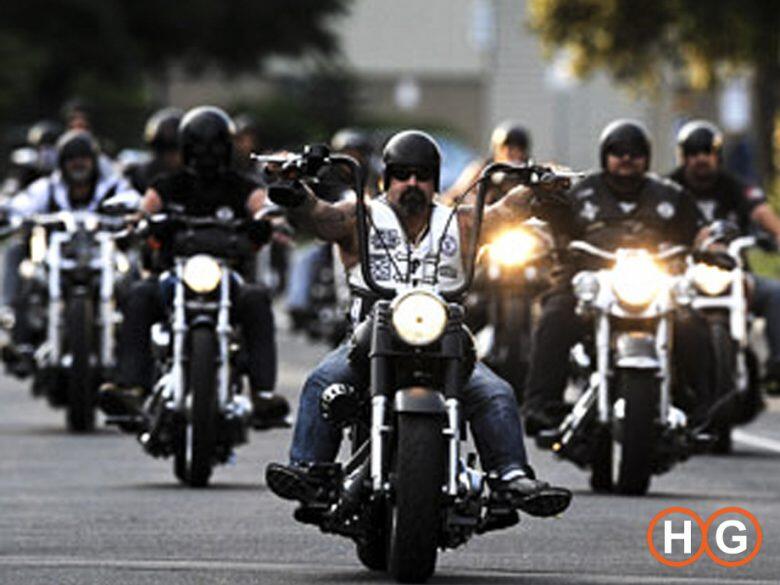
Due to the nationwide closure of many motorcycle clubhouses because of criminal activities, meeting places for motorcycle clubs are becoming increasingly scarce in the Netherlands.
In various Dutch municipalities, the influence of ‘motorcycle gangs’ in cafes and clubs is now noticeable. For instance, the mayor of Oldenzaal recently warned his hospitality business owners about the arrival of motorcycle clubs such as Satudarah and Hells Angels. In his letter to the business owners, he provided tips on, among other things, drafting house rules that do not tolerate group gatherings.
Cities such as Den Bosch, Tilburg, and Zwolle are also tackling the ‘motorcycle club problem,’ each in their own distinct way. The municipal government of Den Bosch has included in its hospitality ordinance that motorcycle gangs are no longer allowed to hold meetings in cafes. In Tilburg, for example, it is prohibited to visit hospitality establishments in the city center wearing club attire, and Zwolle Mayor Henk Jan Meijer has concluded that a nationwide increase in ‘motorcycle gangs’ in the hospitality sector can now be observed. Exact figures are difficult to provide in this regard, but the gangs are clearly making their presence felt in hospitality venues, according to the mayor, who is also the chairman of the national strategic consultation group that tackles motorcycle gangs with municipalities, the police, the Public Prosecution Service, the FIOD (Financial Intelligence Unit), and the Tax and Customs Administration.
Current government policy is aimed at preventing or closing clubhouses of motorcycle clubs such as Hells Angels, Satudarah, Bandidos, and No Surrender. Municipalities successfully invoke the Hospitality Act or zoning regulations to bar or close a ‘clubhouse’. However, the success of this fight has a downside for the hospitality industry. After the closure of their ‘clubhouse’, local motorcycle clubs ‘chapters’ (divisions) go in search of new places to meet. The national consultation group will therefore contact the Royal Dutch Hospitality Association ‘to examine how hospitality entrepreneurs can be provided with tools’ to bar club members from their establishments.
Mayor Peter den Oudsten of Groningen is also concerned. By strictly enforcing the rules, municipalities can make things more difficult for ‘motorcycle gangs’. With the closure of two cafes due to drug trafficking, Groningen has succeeded in depriving clubs of their ‘home base’. The city of Groningen officially no longer has a branch of a motorcycle club; the same applies to Assen. “Nevertheless, the club members do make their presence felt in the city,” says Den Oudsten. Especially in the hospitality industry. They regularly enter establishments in groups wearing club attire, which deters other guests.
The North Netherlands Police Unit, cooperating municipalities, the Public Prosecution Service, and the Tax and Customs Administration intervened against motorcycle clubs more than seventy times in 2016. In more than half of the cases, this involved administrative measures, such as preventing or closing a ‘clubhouse’ or banning an event.