October 23, 2025 · Team HG
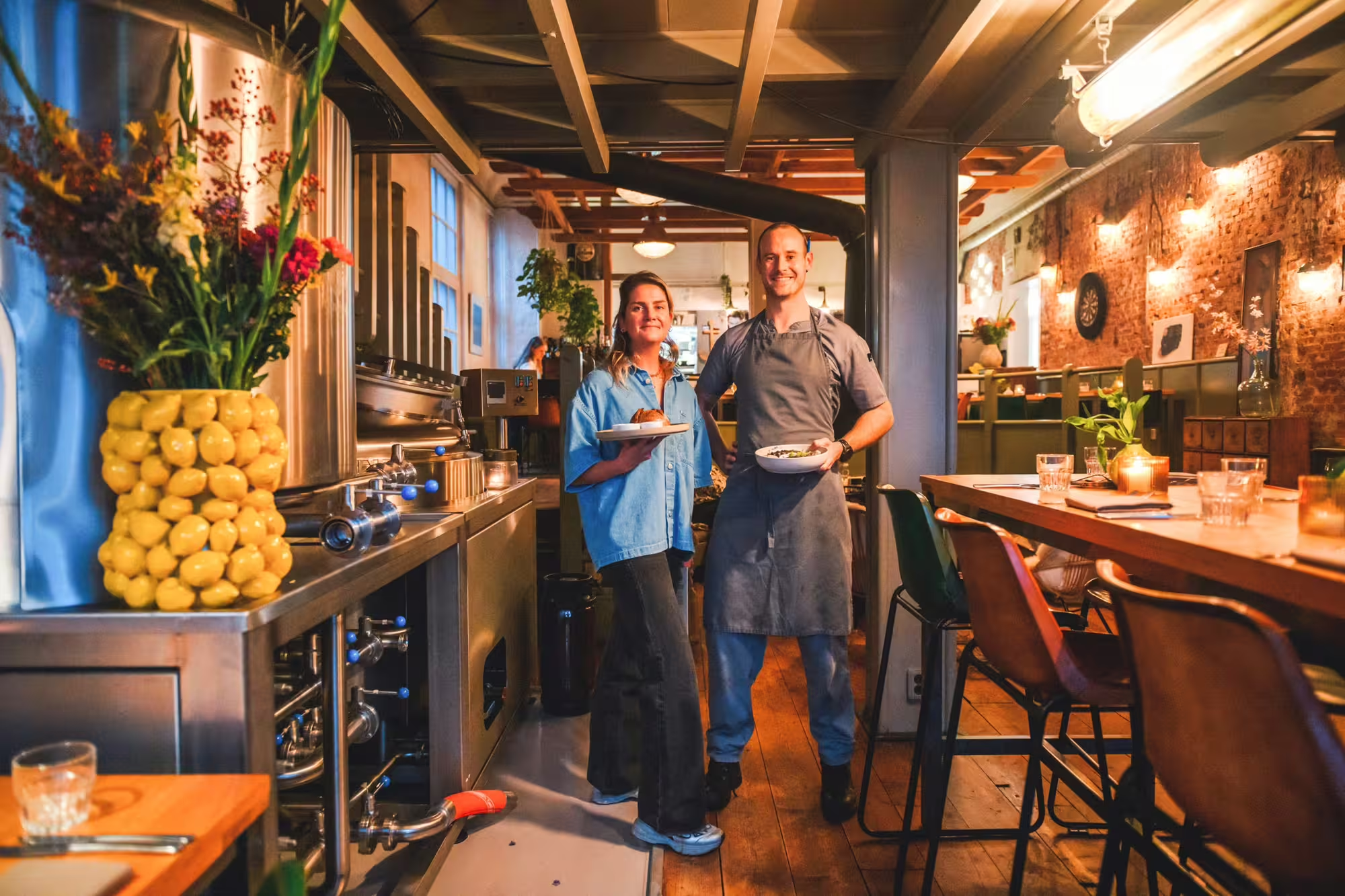
Sustainability, not used as a form of marketing but as a way of working. And perhaps even more importantly: a way of thinking. In Groningen, there are two entrepreneurs who don't explain sustainability, but execute it. Luuk Bouwman of Luuks Brood bakes bread that is not quite finished, so that chefs can finish it themselves. Maaike van der Maar runs the all-day breakfast restaurant Pernikkel the way you would run a place you enjoy spending time in yourself: honest, thoughtful, and with choices that make sense. No avocado if it has to come from far away. But eggs benedict, with eggs from a local farm.

Both companies are rooted in the city of Groningen, surrounded by a large network of suppliers, customers, guests, and collaborations. One cooks with ingredients whose maker and origin are known. The other calls his miller if the wheat bakes slightly differently than the week before. No intermediaries, no detours. But: brioche, banana bread, whole wheat with seeds. And at Pernikkel, if the bread runs out, it's gone. Because waste is not on the menu.

Both Pernikkel Companies like Luuks Brood are examples of entrepreneurs who started small and gradually found their place in the local ecosystem. They do not work from a pursuit of perfection, but from principles. They learn, experiment, and adjust, with attention to taste and origin. Simply good food with both feet firmly on Groningen soil.
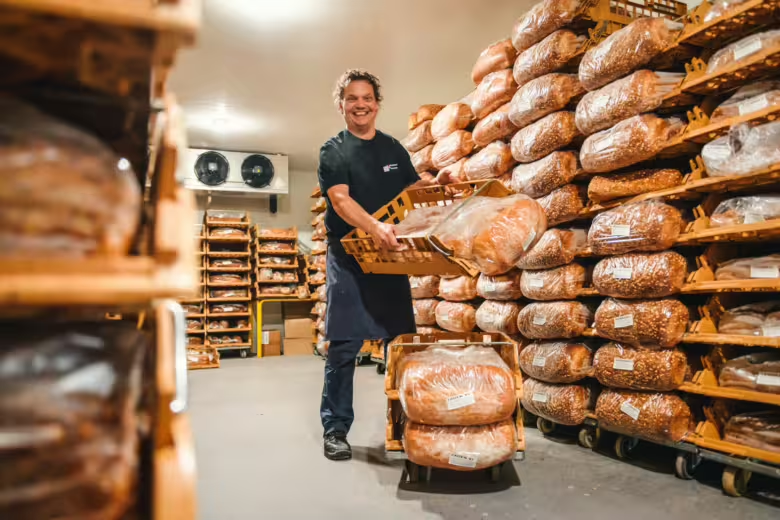
Luuk Bouwman started out over twenty years ago in a tapas bar on the Akerkhof in the city. He baked focaccia, garlic bread, and olive bread. Not long after, the first chefs came knocking: asking if he could also make custom bread. Nowadays, he supplies it with his company. Luuk's Bread to over 35 hospitality businesses in and around Groningen. He calls himself a ‘hospitality baker’, but he is actually much more than that. Product developer, collaborator, support system, supplier—all in one.


His phone is full of app groups: one per customer. That way, he keeps contact brief. A restaurant wants a slightly smaller roll? Then Luuk adjusts it. Is the wheat a bit wetter this year? Then he calls Jan Mulder Pot, the miller in Kropswolde with whom he has been working for more than ten years.
Luuk knows what goes into his flour. No flour improvers or additives, but the whole grain, including the husk. ‘That gives the bread flavor, softness, and character,’ Luuk adds. He works with three types of flour from Mulder Pot: semi-patent, whole wheat, and spelt. ‘When I say whole wheat, I really mean 100% whole wheat. Not a mix of white flour with some coloring, like in a lot of supermarket bread.’
At restaurant Pernikkel, sustainability isn't found on the menu, but in the way choices are made. More local, less waste, conscious portions. Maaike van der Maar and her team readily say no to products that don't fit their vision. "If, for example, there is no local fish, then it simply isn't on the menu," she says.

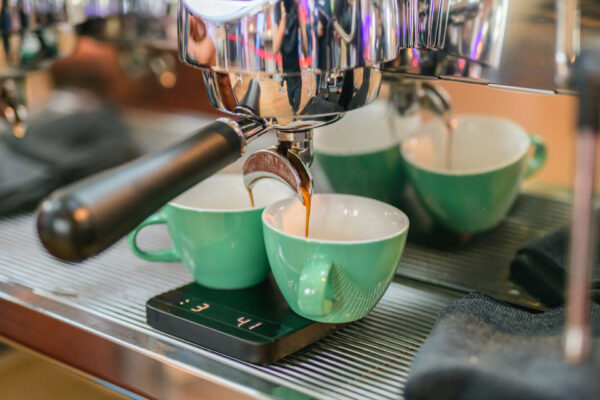
With this vision, they also express their, as they put it themselves, great ambition: namely, creating a trash-free world where trash-free eating and doing business locally are the norm. They are already making enormous strides in this regard, something many other restaurants might be envious of. ‘We go to great lengths to give local products and stories a place,’ says Maaike. ‘The coffee comes from a roastery you can walk to yourself. The eggs are from a well-known farmer not far from here, and the bread is from Luuk. Fresh, and baked just enough so that it gets just that little nudge in our own oven before we serve it.’

Guests might not all notice it consciously, but it’s in everything. And anyone who asks gets the whole story along with it. From wheat to toasted sandwiches. Yet most people come ‘just’ for a tasty lunch. And that is exactly the intention. ‘When people feel good and eat well, they sometimes do something better on their own,’ says Maaike. ‘Even if they don’t realize it themselves.’


The collaboration between Pernikkel and Luuks Brood started through word of mouth, as is often the case in a city where lines of communication are short. By now, it is much more than a supply relationship. Luuk knows what Pernikkel needs, and Pernikkel knows what Luuk makes. If something needs to be adjusted, it happens without complicated and time-consuming consultations; a single text message is enough.
For Luuk, it is important that his work is visible. ‘I can put on my van that I am a baker from Groningen, but the story only begins when a restaurant tells that story on the menu.’ Pernikkel does just that. And that makes all the difference. Not only for the guest, but also for Luuk. New clients often come in through other chefs and sous-chefs who already know him from previous kitchens. Word-of-mouth advertising, in the most literal sense.

For both entrepreneurs, it is all about stories that are real. A lunch at Pernikkel is never merely functional. ‘We want to show people that good food doesn’t have to be complicated,’ says Maaike. ‘You don’t need ready-made things for a tasty bite.’ What you *do* need: people who dare to choose.

Luuk sees this reflected in the loyalty of his customers. Some temporarily switch to another baker, but often return after a year. "Then the bread sells itself," he says with a laugh. His style is uncompromising: no rock-bottom prices, no bread with fillings and artificial coloring. Instead, quality, personal contact, and a love for the craft.
Luuk is always focused on innovation, as long as it isn't a passing fad. Potato bread, experiments with salt substitutes, natural fermentation—anything to make better bread that keeps longer, is easier to digest, or simply tastes better. Not every experiment succeeds, and that’s okay. "If I’m not satisfied with it myself, it doesn’t leave the door," says Luuk.

Pernikkel is also continuing to develop. They want to collaborate even more with local producers, including for products such as cheese and vegetables. "It is a quest, but a fun one," says Maaike. "And if it works out, it tastes extra good."

For Luuk and Maaike, sustainability lies in small choices made consistently. In products without unnecessary additives. In collaborating without friction. In being proud of what you make and do, and conveying this in such a way that others become enthusiastic about it. So that people start seeing it as something ‘normal’, rather than something forced.
Pernikkel and Luuks Brood do not set up a chain, they are the chain.

Read all about the Green Choice? The Green Choice is a project in which Groningen hospitality entrepreneurs, chefs, and local producers collaborate to make sustainable food routes visible. Through portraits, interviews, videos, and cooking demonstrations, the journey of local products—such as grains, potatoes, game, and shrimp—from producer to dish is visualized. The project promotes the short supply chain, strengthens regional cooperation, and offers inspiration for both hospitality professionals and conscious consumers. De Groene Keuze is an initiative of the Foundation for Economic Cooperation Northern Netherlands supported by the Province of Groningen and Municipality of Groningen
© 2025 ESNN Foundation
Text: Tanja Tuinstra
Photography: Jasper Bolderdijk
Video: Twan Siertsema