June 18, 2020 · Team HG
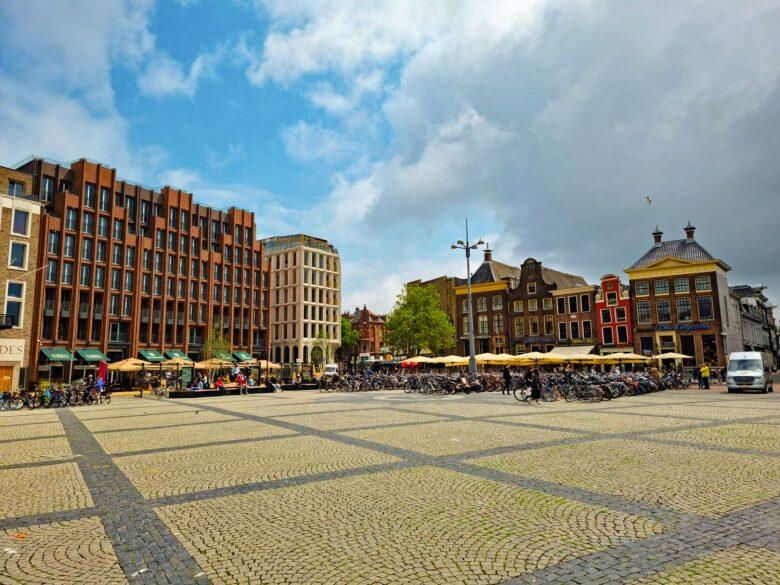
For several years, we at horecagroningen.nl have been watching with mixed feelings the worrying developments within the hospitality policy in the city of Groningen and their consequences. Recent measures regarding the coronavirus policy appear to be the final push in the wrong direction for a vibrant city center. What started a few years ago with a switch to a kind of excessive crowd management to relieve the city center on the few busy days of the year has turned into a policy in which the Groningen hospitality industry seems to be sidelined.
Groningen ‘the city that never sleeps’ or gradually lulled to sleep? Where do we stand, and what remains of the vibrant Groningen city life without closing times? Groningen, a student city; back when we were still studying, it was a party. The Keiweek (then still 7 days long), in the distant past even 21 days! Your first introduction to the city (and studying). Whether you were born in Groningen or lived in one of the villages surrounding the city, the city's hospitality venues were the place to have fun in your favorite pub or club. From Monday to Thursday: happy hours, student nights, and study drinks; on Friday and Saturday: night out for regulars. Those with energy left over even had a Sunday weekend wrap-up in the bars and restaurants.
And then there were the wonderful holidays when everything and everyone came together in the city. August 28th, the Relief of Groningen; April 29th, Queen's Night; April 30th, Queen's Day; May 5th, Liberation Day; and countless other holidays, vacations, and events. The nightlife industry flourished, and the Groningen city center had the most pubs per capita compared to other cities. The daytime hospitality industry was a completely different sector back then. Spending patterns were different; lunch was reserved for a smaller group of guests, and dining out was more for special occasions or simply grabbing a cheap student meal! The holidays were busy and lively, and naturally things happened occasionally, but were they *too* busy?
Higher incomes, more dining out, study pressure, a raised legal drinking age, a smoking ban, food delivery, societal changes, and a hospitality policy that is flying in all directions. The hospitality industry is no longer what it once was, and that is partly logical given the current zeitgeist. Fortunately, the time when the entire city center had to adopt a ‘rattan look’ on its terraces and other such overblown ideas lies far behind us. Freedom of entrepreneurship became the motto. Numerous new daytime and nighttime establishments opened their doors since the credit crisis of 2007-2009, and over the years, the city's hospitality scene has shifted from tapping beers and having a daily special on the menu to a higher segment of hospitality and increasingly diverse concepts. Something that has always been there, but is now even more professionalized. In Groningen's hospitality scene, guests are entertained and enjoy their free time while having a drink, a bite to eat, or dancing. The city's hospitality scene is a meeting place, an outlet, a living room, and the place where we come together to celebrate special occasions. All that changed with the word ‘crowd control’ and a hospitality policy in which the city center was increasingly bypassed.

The city center buzzed despite the changing society. Terraces and pubs were full, but no longer every day of the week. We got along much better again in the years following the crisis and, among other things, went out more often and dined in the hospitality industry. Holidays and events also became busier because spending patterns changed. On Queen's Night and Day, a mandatory walking route even appeared for crowd control, and various smaller activities by city hospitality entrepreneurs were spontaneously rejected, something that changed the course of both events forever. Ultimately, this ‘crowd management’ led to a completely new vision for the hospitality industry and the city center, and the phrase ‘spreading the crowd’ became the new driving force.
All of this resulted in, among other things, a whole series of large festivals and events just outside the city center, primarily organized by parties from other parts of the country that do not contribute to Groningen or the Groningen economy. The consequence? The city center, and particularly the nightlife scene, became quieter. On holidays and during major events, a large proportion of clubbers—especially younger ones—no longer come to Groningen's city center, which naturally impacts nightlife in general. Additionally, to counteract the declining retail trend caused by online shopping, the idea was conceived to give shops partial hospitality functions. Thus, you might suddenly be able to order a beer at the hairdresser's, and a clothing store might be half a coffee shop. In short, the death blow for the city's hospitality industry in the long run.
But was it actually always as extremely busy as municipal policy would have you believe? Let's do a quick calculation. The number of inhabitants in the municipality of Groningen was 187,298 in 2010. In the most recent census from 2019, the population was 233,221, including the merged municipalities of Haren (approximately 19,000 inhabitants) and Ten Boer (approximately 7,000 inhabitants). This means that the population of the municipality of Groningen increased by approximately 20,000 inhabitants in ten years between 2010 and 2019, if we exclude Haren and Ten Boer, as this does not involve natural growth. So, 20,000 new inhabitants in 10 years' time—about 2,000 new inhabitants per year of all ages, from young to old, of whom only a fraction will visit the hospitality industry. For convenience, a large party organized to relieve pressure on the city center attracts some 20,000 to 30,000 visitors, and by now, that amounts to many per year. Conclusion: every major event for the sake of ‘crowd management’ draws more nightlife crowds out of the city than there are partygoers, and in the long run, these nightlife crowds will stop going into the center altogether because they visit less and less. Not exactly a ‘Support your locals’ policy, which the municipality claims to pursue.
The city center went into lockdown, the city was empty for months, and remains quiet. Thirty people in your hospitality business and, as of July 1st, only a hundred—that obviously doesn't make much of a difference. You would think that a sound policy would be formulated immediately to keep the city center alive for visitors and entrepreneurs. But no, even more ‘crowd control’ for visitors who aren't there. Creating some extra terrace space with great difficulty, illogically closed streets, bans on cyclists, and, to top it all off, yet another major event just outside the center to manage ‘all’ the nightlife crowd.
Perhaps this is precisely the time to put a positive spin on things and take a different path. Let us use Corona to make and keep the city center lively day and night again, just like before, and above all by working together. After all, there is really no question of massive crowds—nor ever has there been, except for a few public holidays that are easy to manage if there is good cooperation. Groningen is not Amsterdam; there are no masses of tourists here, and let's be honest, a population growth of 2,000 inhabitants per year can hardly be called exceptional.