September 23, 2025 · Team HG
He cultivates them with care in Spijk; they give them a new stage in the kitchen of The Market Hotel. Potato farmer Menko van Zwol and Daniel Oudman & Cor Alders of The Market Hotel are certain: if you take taste and origin seriously, even the most ordinary potato becomes a gastronomic choice.

Potatoes? They are often tucked away in fries, mashed potatoes, or buried under sauce as a side dish. But whoever talks to Menko van Zwol hears love. Love for the crop, for the clay, for time.
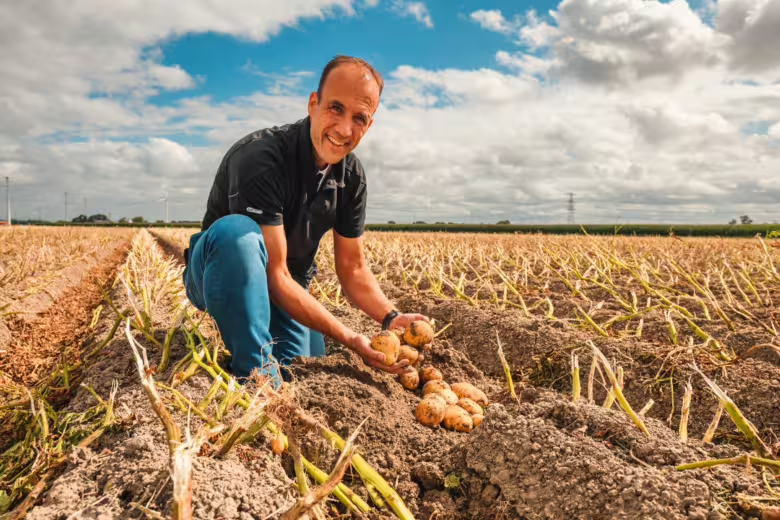
‘When you go out into the fields early in the morning and the dew is still hanging on the ridges… then you know again why you do it,’ he says. ‘And you can clearly taste the difference too. Here, on the North Groningen clay, a potato with character grows.’


In the 1980s, his father went door to door selling potatoes. ‘He was a real businessman,’ says Menko. Around 2,500 households were supplied with the potatoes every other week. But that changed when Menko took over the company in 2012. ‘We saw that potato consumption was declining, so we started focusing on greengrocers, farm shops, and the hospitality industry. The time when everyone had a big house with a cellar where 100 kilos of potatoes were kept in stock as standard was over.’
From Zwol He grows, among others, Frieslanders and Bildtstars, using organic fertilizer and as little chemistry as possible. ‘That is sometimes necessary, because otherwise you simply won’t reach your numbers. I am in the process of converting to organic, but I have been working on nature-inclusive farming for ten years. Clay is unpredictable, but generous. And if you let nature do its work, you get more back than you put in. A healthy soil is the most important thing.’

‘Planet, people, profit’ is the definition of sustainable business to me. And yes, perhaps very old-fashioned, but I do see us as stewards. We only have this place on loan, and we must try to leave everything in even better shape. That was even written in my great-grandfather’s building plan book from 1880. In addition, you simply have to be good to the people you work with.’

His approach means making choices: not squeezing the maximum out of the soil, but working in balance with soil, seasons, and biodiversity. ‘You build up soil life, and ultimately you see that reflected in the quality of the harvest. It takes more time, but you get a potato that actually tastes like something.’
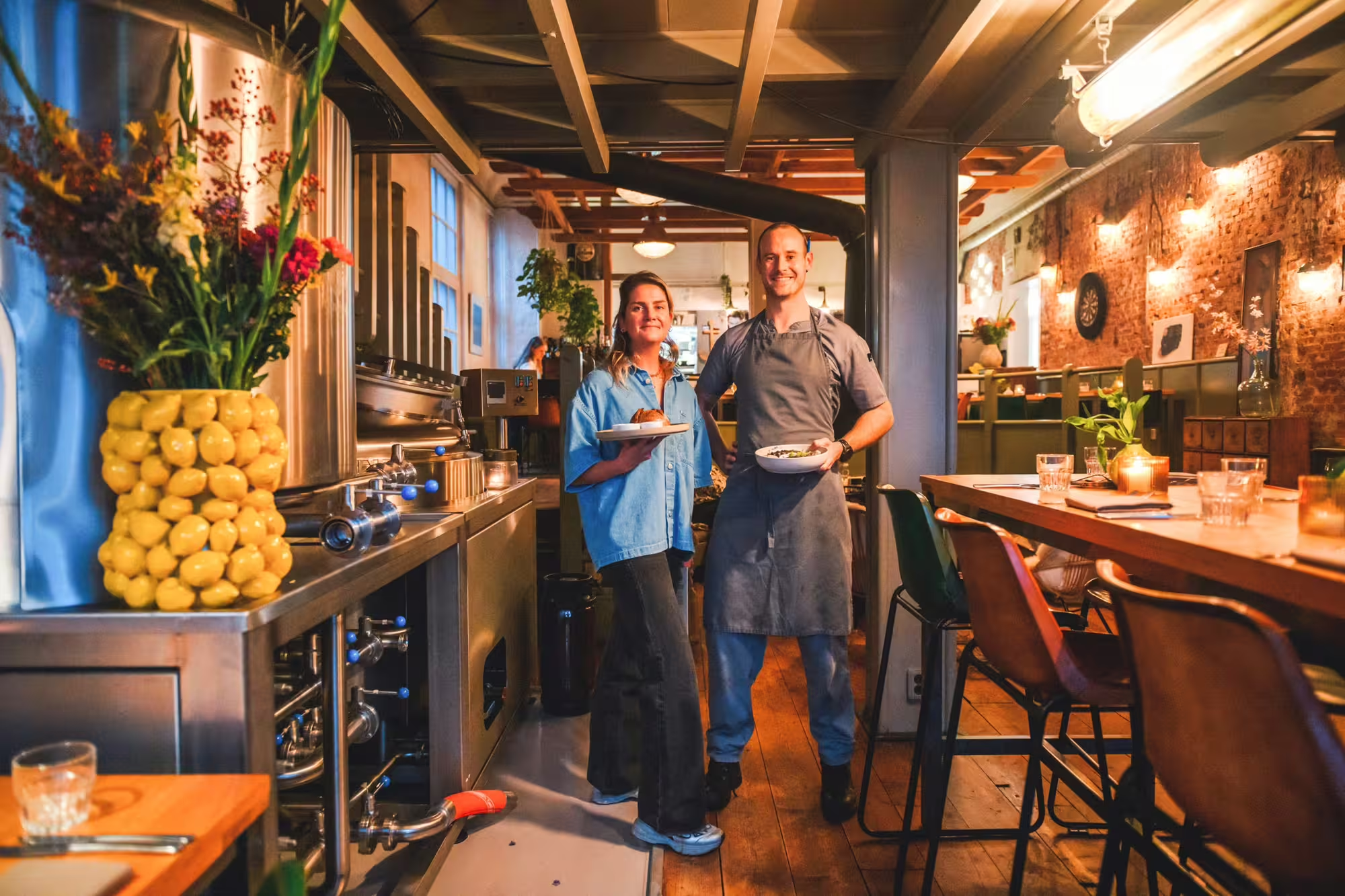
For The Market Hotel At the Grote Markt, that origin was a reason to collaborate. ‘We cook for a broad audience here,’ says executive chef Cor Alders. ‘You can buy cheaply through a wholesaler, but then you can taste the difference. We wanted a potato where story and taste come together.’ Daniël Oudman, an intern, adds: ‘What Menko grows comes from the neighborhood and is delicious. We don’t need truffle potatoes from France. Why fly something in when you can get it just a half-hour drive away?’
‘The potato is a great product,’ Cor continues. ‘You can really do anything with it, it is a wonderful staple product, and it also fits our province perfectly.’

The Market Hotel, with Café Willem Albert as the city's living room, stands on historic ground on the Grote Markt. The Scholtenhuis once stood here, the home of agricultural industrialist Willem Albert Scholten, who started producing potato flour at a young age. A history that coincides beautifully with the choice of a Groningen potato.
The potato is at The Market Hotel not at the back of the plate, but in the middle. "We are going to make a potato millefeuille. We are combining that with a piece of Groningen beef, a combination of Groningen Blaarkop and Belgian Blue," says Cor.
‘The beauty of it is that you have the choice between the young potatoes first and the slightly later ones. Both have a very different and distinct flavor. If you then combine this with Groningen asparagus or leeks from the province, the whole plate is local. That is always my aim, too: to source at least two components of a dish from the region.’


According to Cor, it is not about complexity, but about attention. ‘You have to dare to choose simplicity. Good products don’t need frills. What you do need is a good story.’ You see this approach reflected throughout the kitchen. ‘Whether it concerns meat, vegetables, or potatoes, we want to know what we are serving, and why.’
However, collaboration is not a given. Many farmers barely receive a fair price, and chefs are used to getting the best deal and buying in bulk from a wholesaler. ‘It is always a search for balance,’ says Menko. ‘But I notice that chefs are becoming more open. They want to know where things come from. How they grow. And that creates trust.’
At The Market Hotel, that transparency is a conscious choice. ‘We don’t take the price of the product as a starting point,’ says Daniel. ‘We first look at: what is it worth? And how can we prepare it so that guests will appreciate it too?’

That story plays a role for the guests as well. ‘People like to hear where something comes from,’ says Cor. ‘Especially if it comes from the region. You’re not just eating a potato, you’re eating a piece of North Groningen.’
From farm to fork: at Van Zwol, the chain is truly short. ‘We grow the crops ourselves, buy the seed potatoes from farmers we know, store everything ourselves, process it ourselves, and finally put it in the bags ourselves. We even keep an eye on things in the supermarket. How are they looking? Are they being handled well enough? That is the short chain.’

Moreover, that short chain creates more connection. ‘You know who you are feeding,’ says Cor. ‘Who is behind the product. That makes the product less anonymous; it gets a face.’
It is also inspiring for the kitchen staff. ‘Our cooks see where it comes from. They hear Menko’s story, still feel that Groningen clay on their hands. That makes the work even more meaningful,’ says Cor.

What connects them is a love for the craft. For simplicity, as a choice. ‘There is nothing wrong with fries or mashed potatoes,’ says Cor, ‘but you can do so much more with them.’ Menko hopes that more chefs will take the step. ‘When you know who you feed, and who prepares your product, food becomes real again. That is where sustainable agriculture begins.’
And maybe, just maybe, that everyday potato will become what it once was again: a hero on the plate.

Read all about the Green Choice? The Green Choice is a project in which Groningen hospitality entrepreneurs, chefs, and local producers collaborate to make sustainable food routes visible. Through portraits, interviews, videos, and cooking demonstrations, the journey of local products—such as grains, potatoes, game, and shrimp—from producer to dish is visualized. The project promotes the short supply chain, strengthens regional cooperation, and offers inspiration for both hospitality professionals and conscious consumers. De Groene Keuze is an initiative of the Foundation for Economic Cooperation Northern Netherlands supported by the Province of Groningen and Municipality of Groningen
© 2025 ESNN Foundation
Text: Tanja Tuinstra
Photography: Jasper Bolderdijk
Video: Twan Siertsema